

Implementation of the "Stay-at-Home" Evacuation Campaign
The Tokyo Metropolitan Government is implementing various initiatives aimed at raising individual awareness of disaster preparedness and promoting necessary preparations, with the goal of creating “a society where lives are protected from disasters and people can live safely, securely, and comfortably.
”Given the serious concerns about a major earthquake striking directly beneath the capital, “staying at home” can be a viable evacuation option in buildings with high safety standards, such as those with excellent seismic resistance. Therefore, to ensure that everyone can safely and securely stay at home depending on the situation, we are launching a new “Stay-at-Home Evacuation Campaign” to provide clear, integrated information on measures such as fire prevention, preventing furniture from toppling over, and maintaining daily emergency supplies.
1. Campaign Period
From July Reiwa 8 to March Reiwa 9
2. Using the Campaign Logo
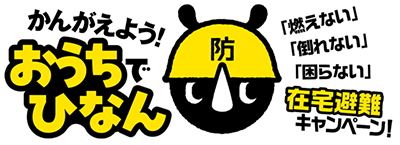
We will use this logo on posters, videos, leaflets, and other materials related to initiatives to promote sheltering in place [Note] to conduct a unified public relations campaign.
[Note] The Three Pillars of Initiatives to Promote Shelter-in-Place
“Non-flammable” (Fire Prevention Measures)
Approximately 60% of fires caused by earthquakes—such as those resulting from electrical equipment catching fire due to seismic shaking or fires that occur when power is restored—are caused by electricity. Install a “Gurapita Switch” (seismic-sensing circuit breaker) to prevent electrical fires and the spread of fire caused by earthquakes.
“Don’t Let It Fall” (Measures to Prevent Furniture from Falling Over)
Between 30 and 50 percent of injuries caused by earthquakes in recent years are due to furniture tipping over, falling, or shifting. Take precautions, such as installing anti-tip devices on your furniture.
“No Worries” (Everyday Supplies, Community Ties, etc.)
To ensure you’re prepared in the event of a disaster, it’s important not only to stockpile food and daily necessities but also to build personal relationships with your neighbors by greeting them and striking up conversations on a daily basis, as well as to foster cooperation within your community through neighborhood associations and other local groups. To protect your own life and the lives of your loved ones when a disaster strikes, be sure to review your preparedness measures regularly.
3. Other
Going forward, we plan to display this material at disaster prevention events and distribute videos, among other activities.
For the latest information, please visit the special page on the Tokyo Metropolitan Government’s Disaster Prevention website.

This project is an initiative to promote the “Tokyo 2050 Strategy.”
Strategy 22: Disaster Prevention—“Promoting Actions to Protect One’s Own Life”


| Contact: (Regarding the “Stay-at-Home Evacuation” Campaign) Disaster Management Division, Comprehensive Disaster Prevention Department, General Affairs Bureau Phone: 03-5320-7771 (Regarding sheltering in place and support for evacuees) General Affairs Bureau, Comprehensive Disaster Prevention Department, Disaster Prevention Planning Section Phone: 03-5388-2553 (Regarding fire prevention measures) General Affairs Bureau, Comprehensive Disaster Prevention Department, Disaster Prevention Strategy Section Phone: 03-5320-7449 (Regarding daily emergency supplies, community disaster preparedness, and measures to prevent furniture from toppling over) General Affairs Bureau, Comprehensive Disaster Prevention Department, Disaster Prevention Strategy Section Phone: 03-5320-7425 |
その他のお知らせ
-
 Earthquake
 -
 Earthquake
 -
 Earthquake
 -
 Earthquake